تم تحديثه في يوليو 2026. تمت مراجعته من حيث إمكانية الحصول على المكملات الغذائية في الممارسة العملية، والصياغة المتعلقة بمخاطر الملصقات، وفائدته في مجال التصنيع بين الشركات (B2B).
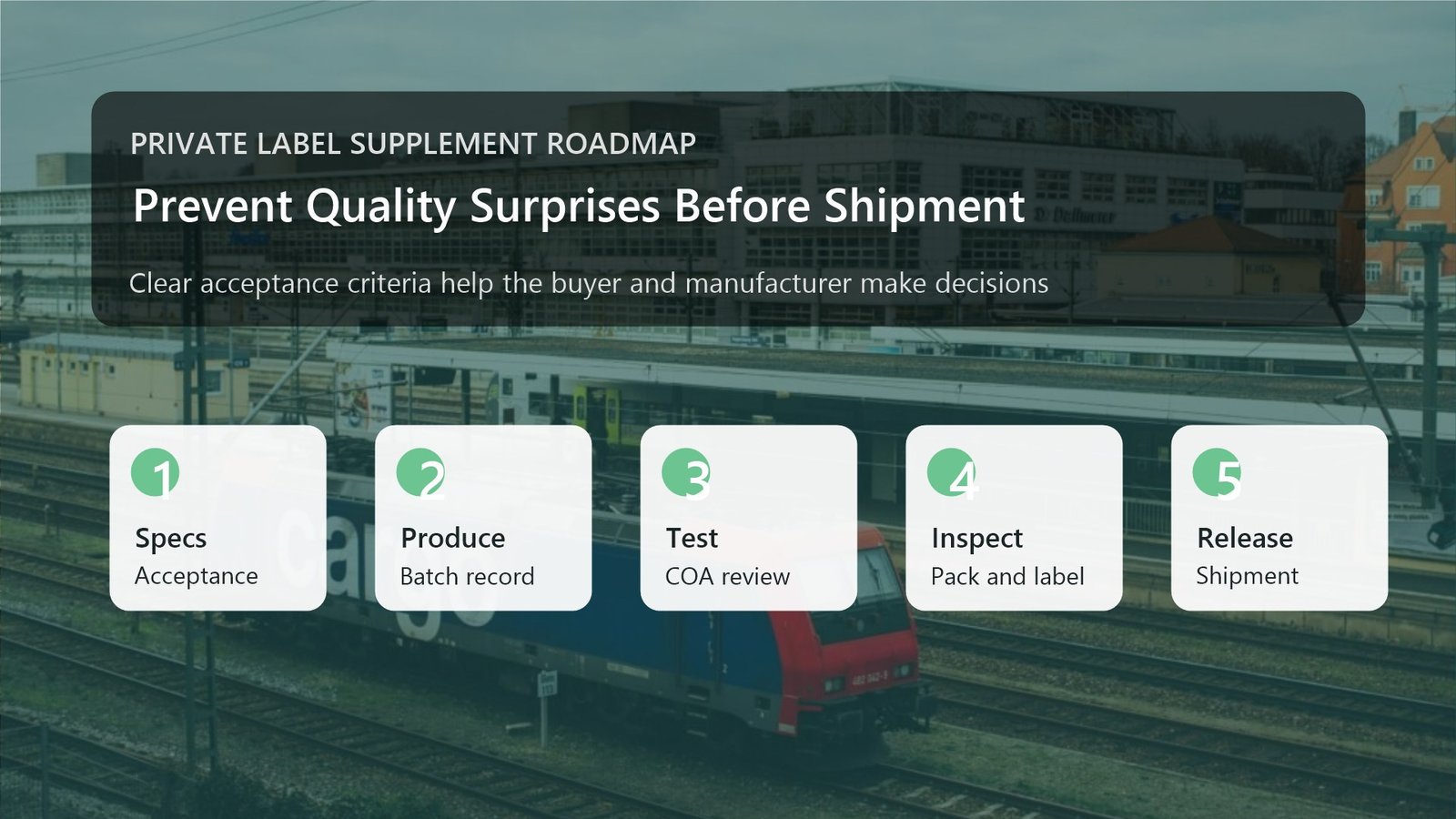
Nutraceutical quality control is not just a certificate at the end of production. It is the chain of decisions that connects the product brief, raw materials, formula, batch record, finished product testing, packaging inspection, and release decision. If the buyer does not define quality expectations early, every later conversation becomes harder.
This checklist is for private label buyers placing OEM supplement orders with manufacturers such as Maxtop Nutra. It applies to gummies, capsules, tablets, and botanical products, including categories shown across the متجر Maxtop Nutra.
Start With Specifications, Not Hope
A purchase order should reference finished product expectations: appearance, count, weight, serving size, packaging, label version, and any testing or documentation requirements. Without specifications, buyers and manufacturers may have different assumptions about what is acceptable.
Specifications should be realistic for the dosage form. A gummy needs attention to texture, moisture, color, flavor, and count. A tablet may need weight, hardness, disintegration, and appearance review. A capsule may need fill weight, capsule size, and odor control.
COA Review Should Match the Product Risk
A certificate of analysis is useful only when the buyer understands what it covers. Does it refer to raw material, finished product, or both? Does it include identity, assay, microbiological limits, heavy metals, or other checks? Are the results tied to the correct batch and lot?
Not every product requires the same tests, but every product should have a documented release logic. For example, botanical extracts may require closer attention to identity and marker compounds, while gummies may require moisture and microbiological review.
Ask how nonconformance is handled
Buyers should ask what happens if a result is outside specification. Possible actions include investigation, retesting under defined conditions, rework, rejection, or shipment hold. The answer should be clear before production starts.
OEM Supplement Quality Control Table
Use this checklist before production and before final shipment approval.
| QC Area | ما يجب التأكد منه | Buyer Benefit |
|---|---|---|
| Specifications | Appearance, count, weight, label version, packaging | Creates objective acceptance criteria. |
| COA | Batch, lot, test items, results, limits | Lets the buyer understand release evidence. |
| Microbial | Appropriate microbial expectations for dosage form | Supports product safety and shelf confidence. |
| Heavy metals | Relevant limits for ingredients and market | Important for botanicals and mineral formulas. |
| التغليف | Bottle, cap, desiccant, barcode, carton mark | Prevents fulfillment and retail issues. |
Packaging and Label Checks Are Quality Checks
Packaging mistakes can create the same commercial damage as formula mistakes. The correct label version, bottle size, cap, desiccant, count, carton mark, and barcode should be checked before shipment. For marketplace sellers, incorrect barcodes or label copy can delay receiving and listing.
Photographic inspection can help overseas buyers review packaging before shipment. It does not replace proper QC, but it makes the release decision more visible.
Case Example: Gummy Shipment Held for Packaging Review
A buyer ordering a private label gummy may discover that the formula is acceptable but the desiccant was not included in the final packaging plan. Holding shipment to correct the packaging may feel painful, but it is usually better than sending a moisture-sensitive product into a warm fulfillment network without the agreed protection.
This is why the packaging specification should be part of the purchase order. Quality is not only what is inside the bottle; it is also how the bottle protects the product.
How to Discuss QC With Maxtop Nutra
When contacting Maxtop Nutra, buyers should share destination market, product format, formula direction, packaging preference, required documents, and any retailer or marketplace requirements. The صفحة البرامج is a useful starting point for discussing project workflow.
A good QC conversation is specific but not adversarial. It helps the buyer understand what will be checked, when it will be checked, and what decision can be made if something does not match the specification.
الأسئلة الشائعة
What is nutraceutical quality control?
It is the process of defining, checking, documenting, and releasing a supplement order against agreed specifications and market expectations.
Is a COA enough for an OEM supplement order?
A COA is important, but buyers should understand what it covers and whether packaging, label, and shipment checks are also documented.
Should buyers inspect packaging?
Yes. Packaging, label version, bottle count, desiccant, barcode, and carton marks can affect sales and fulfillment even when the formula is correct.
Can Maxtop Nutra help define quality checkpoints?
Buyers can discuss project format, market, documentation, and release expectations with Maxtop Nutra during the quotation and sample process.
بالنسبة لفرق المشتريات، فإن الخطوة التالية الأكثر فائدة هي تحويل المقال إلى موجز مشروع من صفحة واحدة. يجب تضمين السوق المستهدفة، وشكل الجرعة، والمكون الفعال، ونبرة العبارات الواردة على الملصق، وتفضيلات التغليف، وكمية الطرح، وأي متطلبات خاصة بتجار التجزئة أو المنصات الإلكترونية قبل طلب عرض الأسعار.
كما أن الموجز الأكثر دقة يحدد أيضًا الجوانب التي لا ترغب العلامة التجارية في تغييرها، مثل كون المنتج نباتيًّا، ونسبة السكر، وحجم الكبسولات، وعدد الزجاجات، أو الحد الأقصى لعدد الجرعات. وهذا يمنع أن تؤدي التعديلات التجريبية إلى حل مشكلة ما في حين تخلق مشكلة أخرى.
بالنسبة للطلبات المتكررة، احتفظ بالعينة المعتمدة، والتصميم النهائي، ووثائق الإفراج، وصور الشحنة في ملف واحد. ويصبح هذا الملف مرجعًا أساسيًّا لعروض الأسعار المستقبلية، ومراجعة الطلبات المتكررة، ومراجعة الشكاوى، ومناقشات أداء الموردين.
ملاحظات حول المصادر ومراجعة
يستند هذا المقال إلى صفحات منتجات وخدمات Maxtop Nutra، بالإضافة إلى الإرشادات الرسمية المتعلقة بالمكملات الغذائية والإعلانات. وقد كُتب هذا المقال لأغراض تخطيط المنتجات ومناقشة الأمور مع الموردين، ولا يُعد بمثابة مشورة طبية أو قانونية أو تنظيمية. يجب أن تخضع الملصقات والادعاءات النهائية لمراجعة متخصصين مؤهلين في السوق المستهدفة.
- برامج ماكستوب نوترا
- معلومات إدارة الغذاء والدواء الأمريكية (FDA) حول المكملات الغذائية
- متجر ماكستوب نوترا
المؤلف: فريق المحتوى في Maxtop Nutra، مع مراجعة تحريرية يوصي بها أخصائي في التركيبات ومراجع لالتزام الملصقات قبل الاستخدام التجاري.