Mise à jour en juillet 2026. Révisé en termes d'approvisionnement pratique en compléments alimentaires, de formulation des mentions de risque sur les étiquettes et d'utilité pour la fabrication B2B.
Dietary supplement label claims are often where a good product becomes a risky product. A formula may be reasonable, the packaging may look professional, and the sample may be approved, but one aggressive phrase on a label or product page can create avoidable review problems. For private label brands, claims should be treated as a production input, not an afterthought.
This guide is written for supplement founders and sourcing teams working with an OEM manufacturer such as Maxtop Nutra. It references official Informations de la FDA sur les compléments alimentaires et FTC health product advertising guidance, while keeping the article focused on practical brand workflow.
Claims Are a System, Not a Slogan
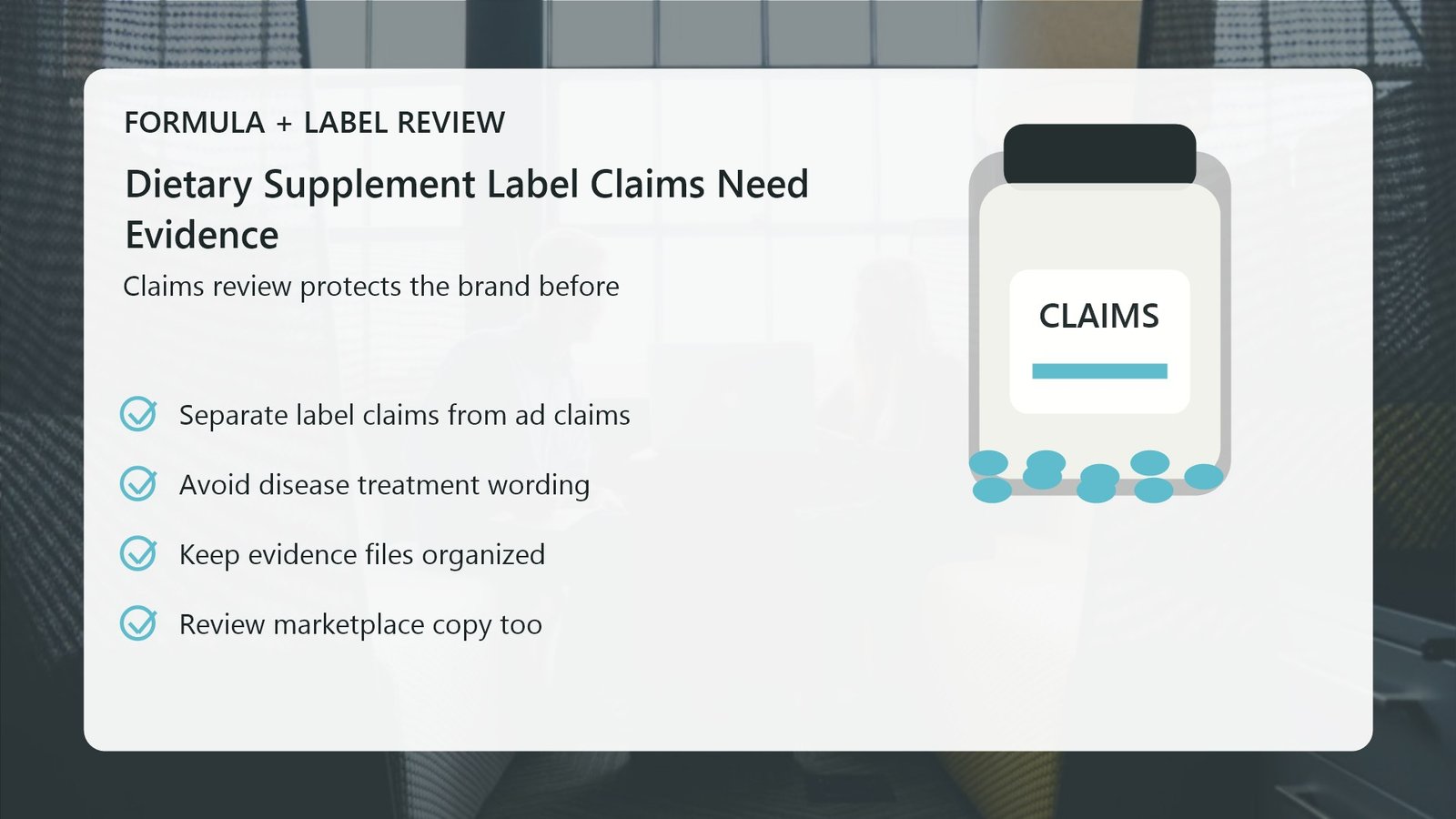
A claim is not only the line on the front label. It includes supplement facts, suggested use, website copy, marketplace bullets, social ads, influencer scripts, email campaigns, and before-and-after style messaging. A careful brand reviews the whole claim system before launch.
The most practical method is to create a claims matrix. List each proposed claim, where it will appear, what ingredient or formula point supports it, what evidence file supports the wording, and who reviewed it. This is especially useful when the product will sell across multiple channels.
Avoid Disease Language and Guaranteed Outcomes
Supplement brands should be cautious with language that suggests treating, curing, preventing, or diagnosing a disease. Words that sound common in consumer marketing can carry regulatory meaning. A phrase like supports immune health is different from treating infections. A phrase like supports joint comfort is different from treating arthritis.
Guaranteed outcomes are also risky. Claims promising visible changes in a fixed number of days, dramatic weight results, or cure-like benefits should be reviewed with extreme care. Helpful content is specific, but it should not overpromise.
Ads need the same discipline as labels
A label can be modest while the advertisement overclaims. Brand teams should review product pages, marketplace listings, short videos, and influencer briefs with the same discipline used for printed packaging.
Dietary Supplement Claims Matrix
A simple matrix keeps the launch team aligned before label and advertising copy are published.
| Claim Area | Example Safer Approach | Review Question |
|---|---|---|
| Structure/function | Supports normal immune function | Is the wording tied to the formula and evidence? |
| Disease language | Avoid cure, treat, or prevent disease wording | Could a reader interpret this as a medical claim? |
| Time-bound result | Avoid guaranteed days-to-result promises | Is the claim realistic and supported? |
| Marketplace copy | Match product page language to label discipline | Are bullets and ads overclaiming? |
| Influencer content | Provide approved talking points | Could third-party content create brand risk? |
Why Artwork Should Wait for Claims Review
Many launch delays come from artwork that was designed before formula and claim review. If the serving size changes, supplement facts change. If a claim is softened, the front panel changes. If a warning is added, label space changes. It is more efficient to finish technical and claim review before buying labels.
A practical workflow is formula feasibility, sample direction, supplement facts draft, claim matrix, label review, packaging design, proof check, and then print approval. This order prevents expensive rework.
Case Example: Rewriting a Risky Wellness Claim
A brand may want to say that a botanical supplement stops inflammation. A safer project discussion would ask what ingredient is used, what evidence exists, and whether the label should instead use more modest support language. For example, a turmeric product direction can be discussed through antioxidant or general wellness positioning rather than disease treatment language.
Maxtop Nutra pages such as Extrait de curcuma et Extrait de thé vert can help buyers frame ingredient discussions, but the final wording still needs a qualified review.
How to Build Claim Review Into a Maxtop Nutra Project
When sending a brief to Maxtop Nutra, include target market, dosage form, ingredient list, draft front-label claims, product page claims, and any competitor references. This lets the team identify manufacturing questions and helps the brand see where claim review should happen.
Maxtop Nutra can support the practical manufacturing side, but a buyer should use qualified regulatory or legal review for final label and advertising approval. The best projects keep this responsibility visible from the start.
FAQ
What is a dietary supplement label claim?
It is wording that communicates what the supplement is intended to support or do. Brands should also review claims in ads, product pages, and social content.
Can a supplement label mention disease treatment?
Brands should be very cautious and avoid disease treatment, cure, prevention, or diagnosis language unless a qualified reviewer confirms the exact legal path for the market.
Why create a claims matrix?
A claims matrix connects wording, formula support, evidence, location, and review responsibility. It prevents late artwork changes and unsupported marketing copy.
Does Maxtop Nutra provide legal review?
Maxtop Nutra can help with manufacturing and product planning, but final legal or regulatory review should be handled by qualified professionals for the destination market.
Pour les équipes chargées des achats, la prochaine étape la plus utile consiste à transformer cet article en un cahier des charges d'une page. Veillez à y inclure le marché cible, la forme galénique, le principe actif, le ton des allégations figurant sur l'étiquette, les préférences en matière d'emballage, la quantité prévue pour le lancement, ainsi que les éventuelles exigences des détaillants ou des places de marché avant de demander un devis.
Un cahier des charges plus précis précise également ce que la marque n'est pas disposée à modifier, comme le caractère végétalien du produit, la teneur en sucre, la taille des gélules, le nombre de flacons ou le nombre maximal de portions. Cela évite que les révisions apportées aux échantillons ne résolvent un problème tout en en créant un autre.
Notes sur les sources et analyse
Cet article s'appuie sur les pages consacrées aux produits et services de Maxtop Nutra, ainsi que sur les directives officielles relatives aux compléments alimentaires et à la publicité. Il est destiné à la planification des produits et aux discussions avec les fournisseurs, et ne constitue en aucun cas un avis médical, juridique ou réglementaire. Les étiquettes et allégations définitives doivent être examinées par des professionnels qualifiés pour le marché de destination.
- Informations de la FDA sur les compléments alimentaires
- Guide de conformité de la FTC relatif aux produits de santé
- Maxtop Nutra Turmeric Extract
Auteur : L'équipe de contenu de Maxtop Nutra, avec une révision éditoriale assurée par un spécialiste en formulation et un responsable de la conformité des étiquettes avant la mise sur le marché.