Updated July 2026. Reviewed for practical supplement sourcing, label-risk language, and B2B manufacturing usefulness.
Supplement formulation development is where a brand idea becomes a product that can actually be made. Many new supplement founders start with a trend list: green tea extract, turmeric, collagen, apple cider vinegar, magnesium, or probiotics. The work begins when that list is translated into ingredient forms, serving size, delivery format, claim language, packaging, and quality checks.
This guide is for founders and product managers who need a practical path from idea to OEM discussion. It connects Maxtop Nutra product directions such as Green Tea Extract, Turmeric Extract, and Calcium and Magnesium Tablets with the decisions a manufacturer needs before giving a serious quote.
Start With Positioning Before Ingredients
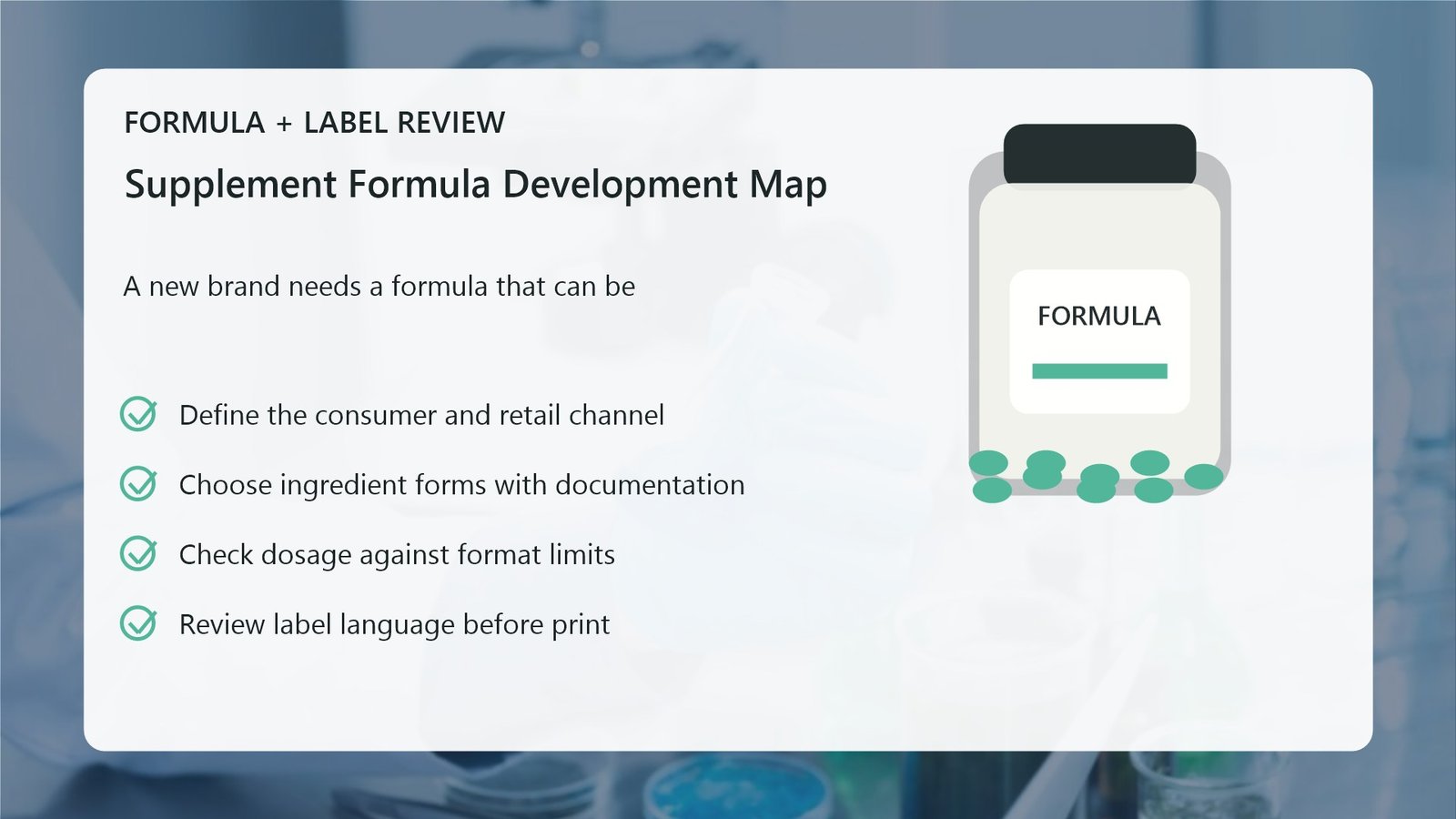
A formula should begin with a specific consumer and use occasion. A daily beauty gummy, a post-workout mineral tablet, and a botanical antioxidant capsule have different expectations even when they share some ingredients. Without positioning, a buyer may overbuild the formula and create a product that is hard to explain, expensive to produce, and difficult to label.
A strong brief states the target customer, main product promise, preferred dosage form, serving size expectation, flavor or capsule preference, and the markets where the product will be sold. This also helps avoid claim language that sounds attractive in a brainstorm but becomes risky when the label is reviewed.
Ingredient Form, Dose, and Manufacturing Reality
Ingredient form is not a small technical detail. Extract ratio, standardization marker, particle size, solubility, taste, color, and documentation all affect the finished product. For example, botanical extracts may need standardization notes, minerals may challenge tablet size, and probiotics need careful handling if they are used in formats that face heat or moisture.
A new brand should ask the manufacturer to explain what is standard, what is custom, and what needs sample testing. Custom formulas can be valuable, but custom work should be driven by a clear product reason rather than a desire to look different on paper.
Do not build the label before the formula is feasible
Artwork should come after formula feasibility and sample direction are clear. Serving size, supplement facts, warnings, and ingredient order can change after technical review. Updating artwork late is slower and more expensive than confirming feasibility first.
Formula Development Decision Table
Use these checkpoints when turning a product idea into a quotation-ready formulation brief.
| Checkpoint | Buyer Question | Manufacturing Impact |
|---|---|---|
| Target user | Who is the product for and how will it be used? | Clarifies dose, format, packaging, and claim tone. |
| Dosage form | Gummy, capsule, tablet, powder, or liquid? | Changes active load, taste, stability, and MOQ. |
| Ingredient form | Which extract, mineral, vitamin, or probiotic form? | Affects documentation, cost, and label accuracy. |
| Claims | What can be supported without disease language? | Reduces revision risk during label review. |
| Sample criteria | What must be approved before scale-up? | Prevents subjective sample feedback from delaying launch. |
How to Review Samples Like a Buyer
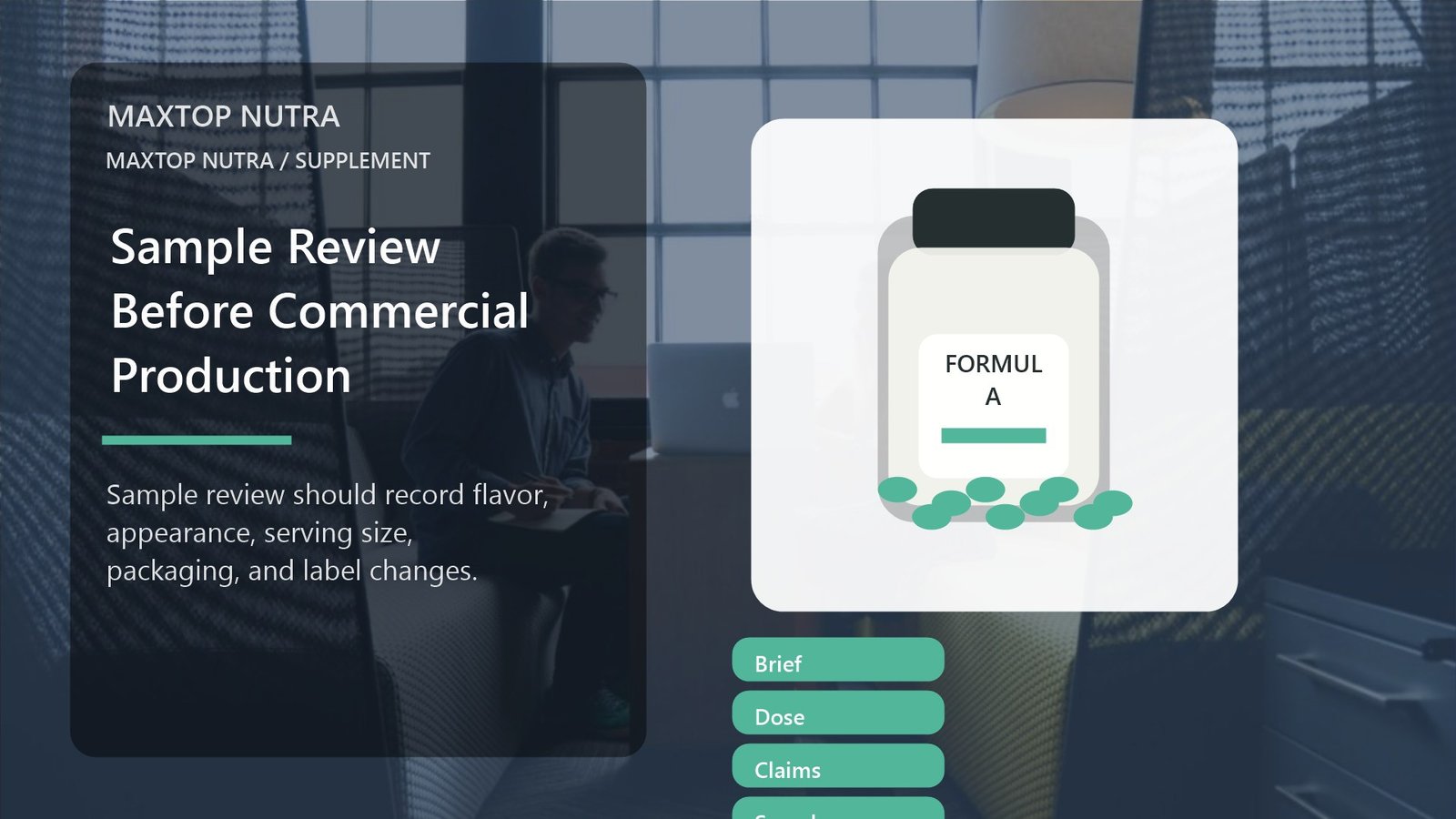
A sample review should be more disciplined than simply asking whether the team likes the taste. Record color, odor, texture, serving size, aftertaste, disintegration or chew, bottle count, packaging fit, and any label implications. For gummies, check whether the texture feels stable after several days in the same packaging. For tablets and capsules, check size and swallowability.
A useful review also notes what should not change. If the sample has the right mouthfeel but needs a different flavor note, say that. If the active level must stay fixed, make that clear before the manufacturer adjusts taste.
Case Note: Turning a Trend Idea Into a Manufacturable SKU
A wellness startup may arrive with a broad request for an energy, focus, and antioxidant formula. A practical development path would first separate the product into one main job: daily vitality support, antioxidant positioning, or beauty-from-within. The team can then choose a dosage form and avoid stacking too many actives into a product that has no clear consumer story.
If the brand wants a botanical direction, Maxtop Nutra pages on green tea and turmeric can help frame the discussion. The final label still needs review, but the product brief becomes easier to quote and sample when the core use occasion is defined.
Where Maxtop Nutra Fits in the Development Process
Maxtop Nutra can support supplement formulation development by helping buyers compare existing product directions, build a practical brief, discuss dosage form options, and move from sample to production planning. Buyers can review the programs page and then use the contact page to share ingredient targets, market, MOQ, and preferred format.
This approach is not a shortcut around regulatory review. It is a way to make the manufacturing conversation clearer so the brand can spend review time on the right formula rather than on vague trend ideas.
FAQ
What should a supplement formulation brief include?
It should include target consumer, main product job, ingredient list, dosage form, serving size, market, packaging preference, claim direction, MOQ target, and any reference products.
Is custom formulation better than using a standard formula?
Not always. Standard directions can launch faster. Custom formulation is useful when the brand has a clear technical or positioning reason and enough timeline for sample work.
When should label review happen?
Label review should begin before artwork is finalized and before production packaging is ordered. Claims, serving size, supplement facts, and warnings may change during formula review.
Can Maxtop Nutra help compare dosage forms?
Yes. Buyers can use existing product pages and the programs page to start a discussion about gummies, capsules, tablets, and other formats.
Source Notes and Review
This article uses Maxtop Nutra product and service pages together with official dietary supplement and advertising guidance. It is written for product planning and supplier discussion, not as medical, legal, or regulatory advice. Final labels and claims should be reviewed by qualified professionals for the destination market.
- Maxtop Nutra Programs
- Maxtop Nutra Green Tea Extract
- Maxtop Nutra Turmeric Extract
- FDA dietary supplement information
Author: Maxtop Nutra content team, with editorial review recommended by a formulation specialist and a label compliance reviewer before commercial use.